Tuesday, 1 May 2012

Bird and human relationships ( bird )


Wild birds and their eggs have been at least incidental sources of food for humans since their origin and still are in most societies. The eggs of some colonial seabirds, such as gulls, terns, and murres, or guillemots, and the young of some shearwaters (muttonbirds) are even now harvested in large quantities. With the development of agrarian human cultures, several species of birds became domesticated. Of these, chickens, ducks, geese, and pigeons, descended from the red jungle fowl (Gallus gallus), mallard duck (Anas platyrhynchos), greylag goose (Anser anser), and rock dove (Columba livia), respectively, were taken in early and have been selectively bred into many varieties. After the discovery of the New World, the turkey (Meleagrisgallopavo), which had already been domesticated by the Indians, and the Muscovy duck (Cairina moschata) were brought to Europe and produced several varieties. Guinea fowl (Numida meleagris) from Africa were also widely exported and kept not only for food but because they are noisy when alarmed, thus warning of the approach of intruders. Besides being a food source, pigeons have long been bred and trained for carrying messages, and the ability of frigate birds to “home” to their nesting colonies has enabled inhabitants of the South Seas to send messages by these birds.
With the development of modern culture, hunting evolved from a foraging activity to a sport, in which the food value of the game became secondary. Large sums are now spent annually on hunting waterfowl, quail, grouse, pheasants, doves, and other game birds. Sets of rules and conventions have been set up for hunting, and in one elaborate form of hunting, falconry, there is not only a large body of specialized information on keeping and training falcons but also a complex terminology, much of it centuries old. Feathers have been used for decoration since early times. Their use in the headdresses of American Indians and various peoples of New Guinea is well known. Feather robes were made by Polynesians and Eskimos; down quilts, mattresses, and pillows are part of traditional European folk culture. Large feathers have often been used in fans, thereby providing an example of an object put to opposite uses for cooling as well as for conserving heat. Whereas most feathers used in decorating are now saved as by-products of poultry raising or hunting, until early in the 20th century, egrets, grebes, and other birds were widely shot for their plumes alone. Ostrich farms have been established to produce plumes. Large quills were once widely used for writing, and feathers have long been used on arrows and fishing lures.
Many birds are kept as pets. Small finches and parrots are especially popular and easy to keep. Of these, the canary (Serinus canaria) and the budgerigar of Australia (Melopsittacus undulatus, sometimes called parakeet) are widely kept and have been bred for a variety of colour types. On large parks and estates, ornamental species like peafowl (Pavo) and various exotic waterfowl and pheasants are often kept. Zoological parks in many cities import birds from many lands and are a source of recreation for millions of people each year. With the rise of agriculture, man’s relationship with birds became more complex. In regions where grain and fruit are grown, depredations by birds may be a serious problem. In North America various species of blackbirds (family Icteridae) are serious pests in grainfields; while in Africa a grain-eating finch, the red-billed quelea (Quelea quelea), occurs, like locusts, in plague proportions so numerous that alighting flocks may break the branches of trees. The use of city buildings for roosts by large flocks of starlings and blackbirds is also a problem, as is the nesting of albatrosses on airplane runways on Pacific islands. As a result of these problems, conferences on the control of avian pests are held with increasing frequency.
Although birds are subject to a great range of diseases and parasites, few of these are known to be capable of infecting man. Notable exceptions are ornithosis (or psittacosis), caused by one or more viruses that are transmitted directly to man from pigeons, parrots, and a variety of other birds, a serious and sometimes fatal disease resembling virus pneumonia. Encephalitis, an inflammation of the brain, is also serious and is transmitted from birds to man and to his domestic animals by biting arthropods, including mosquitos. Wild birds may also act as reservoirs for diseases that adversely affect domesticated birds. Much work has been done recently on the ecology of viruses, with more and more of them being found in birds. The study of birds has contributed much to both the theoretical and practical aspects of biology. Darwin’s studies of the Galápagos finches and other birds during the voyage of the “Beagle” were important in his formulation of the idea of the origin of species through natural selection. Study collections of birds in research museums still provide the bases for important studies of geographic variation, speciation, and zoogeography, because birds are one of the best known of animal groups. Early work on the domestic fowl added to the development of both genetics and embryology. The study of animal behaviour (ethology) has been based to a large extent on studies of birds by Konrad Lorenz, Nikolaas Tinbergen, and their successors. Birds also have been the primary group in the study of migration and orientation and the effect of hormones on behaviour and physiology.
Birds feature prominently in mythology and the literature of many countries. Some of their attributes, real or imagined, have led to their symbolic use in art as in language. The aesthetic and recreational pleasures ofbirdwatching are increasingly being recognized. Man’s impact on bird populations has become increasingly strong. Since 1680, approximately 80 species of birds have become extinct, and an even larger number are seriously endangered. While pollution and pesticides are important factors in the decline of certain large species, such as the peregrine falcon, osprey, and brown pelican, the destruction of natural areas and introduction of exotic animals and diseases have probably been the most devastating. Concerted efforts are required to ensure the survival of rare species and to learn as much as possible about them.
[tags]bird, human, relation[/tags]
(Collection)


New Zealand's stunning natural environment is there to be enjoyed not just looked at.

http://src4.sencha.io/jpg85/http://c0481729.cdn2.cloudfiles.rackspacecloud.com/p-2891A096-BCD8-3537-8D61676ED48A3B37-3228126.JPG

Adventure and fun, a bit of local history, burning up some energy and the thrill of a scenic flight - all in a day from Queenstown on the Otago Rail Trail

It took us 4 days to cycle the whole trail - including a generous number of stops for picnics and the occasional glass of wine but without doubt the highlight was the central section which includes tunnels and the 37-metre high Poolburn Viaduct;

This part of the track takes you away from the road. Where the road meaders around the hills the rail track cuts the corner - but thankfully the tunnels mean you do not have to pedal up and over the hill. We found a lovely spot down by the river for our picnic lunch.

Of course we are fortuntate to live in Queenstown where we own and manage Remarkables Lodge www.remarkables.co.nz so we were able to allow 4 days for the trip but our guests at Remarkables Lodge rarely have such a leisurely itinerary so we have put together a package that enables them to get a taste of the highlights of this trail.

Our  Air-Rail Trail package includes a scenic flight with Glenorchy Air from Queenstown over the Kawarau Gorge and the Dunstan range to where bikes are waiting ready for your trip on the Otago Rail trail.

And at the end of your ride your aircraft awaits to return you to Queenstown and Remarkables Lodge, a long soak in the bath or the hydrotherapy spa and a delicious dinner.

Our environment is the natural foundation on which our economy is built


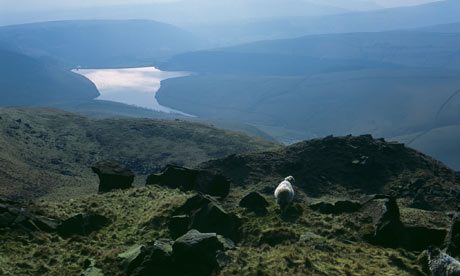
http://static.guim.co.uk/sys-images/Travel/Pix/pictures/2009/6/4/1244133923415/Kinder-Scout-Derbyshire-P-001.jpg
The environment is the natural foundation on which our economy is built. The Peak District contributes £155m to the region. Photograph: David Mansell
Our approach to our natural environment is often bafflingly equivocal.

On the one hand, we're unified by our appreciation of the beauty of our waterways, forests and the diversity of plants, birds and animals. On the other, appreciation hasn't saved them from piecemeal degradation over the years.

Too often as a society, we decide that economic gain and environmental protection are incompatible, instead of inseparable.

The beauty of our landscapes is significant, but few are aware of the solid economic benefits they bring – and what we don't value we don't protect.

So today, when rebuilding their economies is the number one priority for governments across the world, we need to start making the economic case for our environment at least as strongly as we have been making the aesthetic one.

Today, Defra is launching a discussion paper that will lead to the first Natural Environment white paper in 20 years.

It points out that our environment is the natural foundation on which our economy is built.

It creates thousands of jobs and generates billions of pounds.

English national parks, for example, support over 54,000 tourism-related jobs. The Peak District national park on its own contributes £155m to the region – 60% of local businesses say they would suffer if the landscape deteriorated.

Our natural assets don't just add to the quality of our lives – they can actually extend them. Those living within 500m of green space are almost 25% more likely to be active at recommended levels. It's also been estimated that the NHS could save over £2bn through increased activity in open green spaces – our home-grown natural health service.

Our trees are "multitaskers" – capturing carbon and holding soils together, preventing flooding and helping control our climate. They play a particularly important role in our urban cities – in some parts of inner London each tree is calculated to be worth as much as £78,000 in terms of its benefits.

The natural environment, of course, isn't just restricted to our land or air. The passing of the Marine and Coastal Access Act clears the way to the creation of a network of marine conservation zones around the UK that will provide ecosystem services worth up to £1.6bn every year.

The Natural Environment white paper isn't about simply trying to put a price on nature, but about recognising its true value.

The services we get from our environment, ecosystems and biodiversity are not, for the most part, optional. Our honeybees and other pollinators, for example, contribute up to £440m to our economy every year, 13% of the country's entire income from farming.

If our natural capital isn't providing these kinds of services, we will have to pay for an alternative. This isn't just about altruism; it's about enlightened self-interest.

The natural environment is incredibly generous – it provides us with goods and services worth trillions of pounds at no cost.

All it needs in return is that we allow it the ability to function and maintain itself.

If we degrade it to the point that its ability to mitigate the effects of climate change, purify our air and water and keep us healthy is lost, there will be a heavy price to pay.

And our children and theirs will be the one to pay it. We need to become the generation that draws a line in the sand of the steady degradation of our natural capital and says "no more".

Salk researchers reprogram adult stem cells in their natural environment


In recent years, stem cell researchers have become very adept at manipulating the fate of adult stem cells cultured in the lab. Now, researchers at the Salk Institute for Biological Studies achieved the same feat with adult neural stem cells still in place in the brain. They successfully coaxed mouse brain stem cells bound to join the neuronal network to differentiate into support cells instead. The discovery, which is published ahead of print on Nature Neuroscience's website, not only attests to the versatility of neural stem cells but also opens up new directions for the treatment of neurological diseases, such as multiple sclerosis, stroke and epilepsy that not only affect neuronal cells but also disrupt the functioning of glial support cells.

"We have known that the birth and death of adult stem cells in the brain could be influenced be experience, but we were surprised that a single gene could change the fate of stem cells in the brain," says the study's lead author, Fred H. Gage, Ph.D., a professor in the Laboratory for Genetics and the Vi and John Adler Chair for Research on Age-Related Neurodegenerative Diseases.

Throughout life, adult neural stem cells generate new brain cells in two small areas of mammalian brains: the olfactory bulb, which processes odors, and the dentate gyrus, the central part of the hippocampus, which is involved in the formation of memories and learning.

After these stem cells divide, their progenitors have to choose between several options – remaining a stem cell, turning into a nerve cell, also called a neuron, or becoming part of the brain's support network, which includes astrocytes and oligodendrocytes.

Astrocytes are star-shaped glia cells that hold neurons in place, nourish them, and digest parts of dead neurons. Oligodendrocytes are specialized cells that wrap tightly around axons, the long, hair-like extensions of nerve cell that carry messages from one neuron to the next. They form a fatty insulation layer, known as myelin, whose job it is to speed up electrical signals traveling along axons.

When pampered and cosseted in a petri dish, adult neural stem cells can be nudged to differentiate into any kind of brain cell but within their natural environment in the brain career options of neural stem cells are thought to be mostly limited to neurons.

"When we grow stem cells in the lab, we add lots of growth factors resulting in artificial conditions, which might not tell us a lot about the in vivo situation," explains first author Sebastian Jessberger, M.D., formerly a post-doctoral researcher in Gage's lab and now an assistant professor at the Institute of Cell Biology at the Swiss Federal Institute of Technology in Zurich. "As a result we don't know much about the actual plasticity of neural stem cells within their adult brain niche."

To test whether stem cells in their adult brain environment can still veer off the beaten path and change their fate, Jessberger used retroviruses to genetically manipulate neural stem cells and their progeny in the dentate gyrus of laboratory mice. Under normal conditions, the majority of newborn cells differentiated into neurons. When he introduced the Ascl1, which had previously been shown to be involved in the generation of oligodendrocytes and inhibitory neurons, he successfully redirected the fate of newborn cells from a neuronal to an oligodendrocytic lineage.

"It was quite surprising that stem cells in the adult brain maintain their fate plasticity and that a single gene was enough to reprogram these cells," says Jessberger. "We can now potentially tailor the fate of stem cells to treat certain conditions such as multiple sclerosis."

In patients with multiple sclerosis, the immune system attacks oligodendrocytes, which leads to the thinning of the myelin layer affecting the neurons' ability to efficiently conduct electrical signals. Being able to direct neural stem cells to differentiate into oligodendrocytes may alleviate the symptoms.

Source: Salk Institute

Global Natural Environmental Issues and methods to help it

A list of Global Natural Environmental Issues:

Global Natural Environmental Issues
Issues
Causes and Effects
Air pollution
factories, power stations and cars pollute the air; acid rain; trees are damaged
Pollution of the sea
industrial waste sewage is dumped in the sea; wildlife is killed
Global Warming
gases from cars and power stations; green house effect; the Earth becomes warmer; climate changes; sea level rises
Destruction of
 rainforest
trees are cut down; species become extinct; increase greenhouse effect
Nuclear power
nuclear accidents; radioactive material escapes into the atmosphere; may cause cancer.

Obviously,currently the environment is so much contaminated that urgent measures should be taken. The single individual cannot be blamed for the world pollution, however every person should take care of his or her habitat. Actually, some basic things you can do to help natural environment, like:


Cars are getting bigger such as large jeep and truck which are now the most popular new cars in the United States. Bigger vehicles burn more gas and increase problems with acid rain and air pollution. So try to walk, bicycle, or use public transportation. And if you drive a car, keep it tuned up. They can save gas and reduce pollution.

The biggest use of home energy is for heating and cooling. So turn up your air conditioner and turn down the heat, especially at night. Replace regular light bulbs with fluorescent bulbs, which use less energy. And remember to turn lights off.
 

Each American throws away an average of 10 kilograms of trash every day. Most of that trash goes into landfills. Reduce waste before you buy by asking yourself: Do I need the item? Buy products that you can use over and over again. If you use disposable products, choose those made from recycled materials. 

Showers use a lot of water. In one week, a typical American family uses as much water as a person drinks in three years! Buy a special “low-flow” showerhead or take sorter showers. This can cut water use in half. Also, fix any leaky faucets.